Saudi Arabia’s property market has entered a new phase. For years, foreign ownership was limited, highly conditional, and often misunderstood. That changed with the Kingdom’s updated real estate ownership framework for non-Saudis, which came into force in January 2026.
So, can foreigners buy land in Saudi Arabia? Yes — but not everywhere, not in every format, and not under a single blanket rule. Foreign ownership now sits within a regulated framework based on approved geographic zones, registration requirements, and specific conditions that vary by buyer type, property type, and location.
For international buyers looking at Saudi Arabia seriously, the market now divides into two very different strategies. The first is land-led urban positioning, where buyers target large-scale master developments with long-term upside. The second is completed or off-plan branded residences, where the asset is more passive, more operationally straightforward, and easier to position for lifestyle use or managed ownership.
In Jeddah, Amaya stands out on the land and masterplan side, while Trump Tower Jeddah and Trump Plaza Jeddah make more sense for buyers who want branded residential exposure instead of pure land.
The short answer: yes, foreigners can now buy Saudi real estate
Saudi Arabia’s updated Law of Real Estate Ownership by Non-Saudis came into force on 21 January 2026. The law creates a structured mechanism for non-Saudi individuals and entities to own real estate and certain rights, including ownership and usufruct, in areas defined through the Kingdom’s regulatory process.
The framework now covers a broader range of buyers, including:
- Non-Saudi individuals
- Foreign companies
- Saudi companies with foreign shareholders
- Certain institutional and diplomatic entities
This is a meaningful shift from the older regime, which was more restrictive and tied closely to licensed business activity.
However, foreign ownership in Saudi Arabia is not a free-for-all. The system is based on designated zones, not full national access.
Can foreigners buy land specifically, or only apartments and houses?
This is where precision matters.
The law allows non-Saudis to own real estate or acquire rights in designated areas, but that does not automatically mean every foreign buyer can freely acquire raw land anywhere in the Kingdom.
In practice, the most relevant opportunity for foreign investors is not isolated land — it is land within structured, master-planned developments.
This is exactly why Amaya Jeddah stands out.
Amaya is a 1,000,000 m² master-planned development positioned along King Abdulaziz Road in central Jeddah. It represents one of the last large-scale urban land opportunities in a prime city corridor.
For serious investors, this is the difference between:
- Speculative land (uncertain positioning)
- Institutional-grade land within a major urban expansion
If the real question is “Can foreigners buy land in Saudi Arabia?”, the smarter answer is:
👉 Yes — but the best version of that opportunity is structured land inside developments like Amaya.
What are the main restrictions foreign buyers still need to understand?
1. Location matters
Foreign ownership is tied to approved zones. Not every district or city is automatically accessible.
2. Makkah and Madinah restrictions
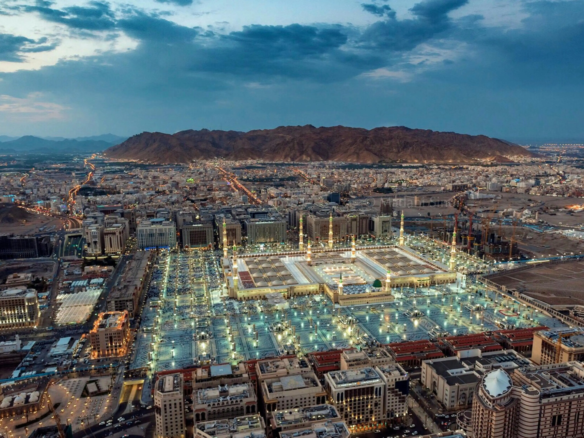
Ownership in Makkah and Madinah is subject to special rules and is generally limited to Muslim buyers.
For international investors, this means cities like Jeddah and Riyadh are the primary focus.
3. Legal registration is mandatory
All foreign ownership must be:
- Properly registered
- Recorded in the Real Estate Registry
- Compliant with regulatory requirements
4. Transaction costs and compliance
Foreign ownership transactions may include:
- Transfer fees (up to approx. 5%)
- Regulatory compliance checks
- Strict penalties for non-compliance
Saudi Arabia is now a regulated investment market, not a casual buying environment.
Does buying property in Saudi Arabia lead to residency?
Potentially — yes.
Saudi Arabia offers a Real Estate Owner Residency option linked to qualifying property ownership.
Key conditions include:
- Minimum property value of SAR 4,000,000
- Property must be residential
- Property must not be mortgaged
- Ownership must be maintained
This is an important distinction:
- Land (Amaya) → long-term capital positioning
- Residential units (Trump Tower / Trump Plaza) → potential residency pathway
Why Jeddah makes particular sense for foreign buyers
Jeddah is one of the most accessible entry points into Saudi real estate for international investors.
It combines:
- Coastal positioning on the Red Sea
- Major urban expansion
- Strong lifestyle appeal
- Active pipeline of internationally marketed projects
In this context:
- Amaya = large-scale land and masterplan exposure
- Trump Tower Jeddah = branded seafront residential
- Trump Plaza Jeddah = integrated city-lifestyle development
Each serves a different investor profile.
If the question is about land, Amaya is the strongest fit
Amaya is not just another project. It is a city-scale development opportunity.
- Approx. 1,000,000 sqm masterplan
- Prime location on King Abdulaziz Road
- Positioned within Jeddah’s future urban expansion
This makes it highly relevant for foreign buyers seeking:
- Scarcity-driven land exposure
- Long-term capital growth
- Strategic positioning within a major Saudi city
In practical terms, Amaya is one of the clearest ways to convert the new ownership law into a real, investable opportunity.
For buyers who want a residence instead of land, Trump Tower Jeddah is the cleaner alternative
Not every buyer wants land.
For those seeking simplicity, branding, and lifestyle positioning, Trump Tower Jeddah is a stronger fit.
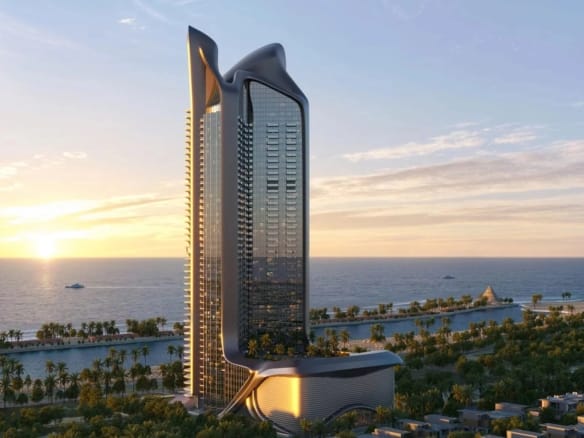
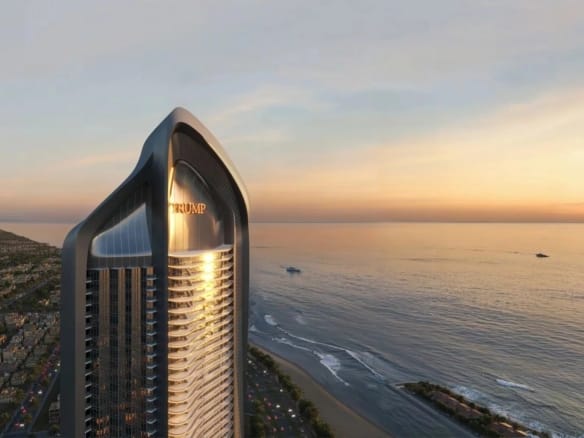
- 47-floor seafront tower
- Located on the Jeddah Corniche
- 1 to 4-bedroom apartments and penthouses
- Estimated completion: 2029
- Private club, concierge, wellness, and lifestyle amenities
This is a plug-and-play investment compared to land.
Where Trump Plaza Jeddah fits — and why it should be secondary
Trump Plaza Jeddah sits within the same broader Amaya masterplan.
It is a mixed-use urban development including:
- Residential units
- Offices
- Retail and dining
- Lifestyle amenities
- Members-only club
This makes it relevant for buyers who:
- Like the Amaya concept
- Prefer a structured, managed environment
- Want a more integrated city-living experience
However, it is secondary in this article, because the primary search intent is land ownership.
How foreign buyers should assess Saudi projects
Before committing, international buyers should always verify:
- Whether the project is within an approved foreign ownership zone
- Title structure and registration pathway
- Developer credibility and licensing
- Payment structure (especially off-plan)
- Residency eligibility (if relevant)
Saudi Arabia rewards structured entry, not speculative buying.
Final verdict: can foreigners buy land in Saudi Arabia?
Yes — foreigners can now buy property, including land exposure, under Saudi Arabia’s updated framework.
But the real investment decision is not just whether you can buy.
It is what you should buy.
- For land-led investment → Amaya Jeddah is the strongest fit
- For branded residential → Trump Tower Jeddah
- For integrated urban lifestyle → Trump Plaza Jeddah
Saudi Arabia is opening — but selectively.
And right now, Jeddah is one of the clearest, most strategic entry points for international buyers.
Foreign Ownership in Saudi Arabia — Key Questions Answered