Branded Residences Investment Guide Branded Residences as a Global Real Estate Asset Class Branded residences investment has become part of a much broader discussion among internationally active buyers, family offices and wealth advisers —…
International Advisory
International Real Estate Advisory
International real estate advisory requires more than access to property. It requires jurisdictional clarity, ownership structuring, residence planning, and long-term transfer visibility.
Cross-border property acquisition is shaped by legal frameworks, foreign ownership rights, mobility considerations, and execution structure. The objective is not simply to acquire internationally, but to position capital correctly across jurisdictions, as outlined in our
international real estate investment framework.
International Advisory
International Real Estate Advisory
International real estate advisory requires more than access to property. It requires jurisdictional clarity, ownership structuring, residence planning, and long-term transfer visibility.
Cross-border property acquisition is shaped by legal frameworks, foreign ownership rights, mobility considerations, and execution structure. The objective is not simply to acquire internationally, but to position capital correctly across jurisdictions, as outlined in our international real estate investment framework.
How to invest in international real estate as a foreign buyer — 12 active markets
International real estate investment: how to buy property across 12 markets, which developments to consider, and how the process works from reservation to registration.
We advise international buyers through property investment across the Gulf, Europe, the Indian Ocean, and Southeast Asia — from first inquiry through to completed registration. Each market has its own acquisition process, ownership structure, payment plan conventions, and registration authority. We handle the advisory, legal coordination, and execution so buyers don't have to navigate unfamiliar systems alone.
Every country below has a live investment guide covering specific developments, current entry prices, payment plan structures, net yields, and the exact steps to buy. Start with the market that matches your objective — or speak to an advisor first if you're comparing markets.
What you get with every advisory engagement
- Market and project selection — matched to your budget, objective, and holding strategy
- Developer and title due diligence — track record, rights document, SPA review coordination
- Payment plan structuring — off-plan milestone schedules negotiated and confirmed in writing
- Registration coordination — DLD, ADM, RERD, ZIPA, EDB, Hellenic Cadastre or relevant authority
- Net yield analysis — management fee, maintenance, and operating cost modelled before commitment
- Post-completion management — operator introduction and handover support where applicable
12
Active investment markets — Gulf,
Europe, Indian Ocean, SE Asia
Europe, Indian Ocean, SE Asia
USD 200K
Entry point — Qatar freehold zone
(QAR 730,000 — Pearl / Lusail)
(QAR 730,000 — Pearl / Lusail)
8–12%
Net yield — Anantara Zanzibar
north coast branded management
north coast branded management
0%
Annual property tax — UAE, Oman,
Qatar, Saudi Arabia
Qatar, Saudi Arabia
How international property investment works
Six steps from inquiry to completed registration — how we take buyers through the process
The process is manageable remotely across all our active markets. Most buyers complete steps 1–3 via WhatsApp and video call before any travel is required.
01
Objective & market match
We confirm the investment objective — income, growth, capital preservation, or residence — and match it to the right market and project type. Budget, currency, holding period, and exit preference are established before any specific development is discussed.
02
Project selection & due diligence
We shortlist verified developments — branded managed resorts, freehold residential, off-plan and completed stock — and conduct developer due diligence. Track record, delivery history, escrow structure, and title or rights document are reviewed before any reservation is recommended.
03
Reservation & commercial terms
Reservation is made under written commercial terms — agreed price, payment schedule, and rights provisions confirmed before the SPA is issued. For off-plan acquisitions, payment milestone structure and developer obligation clauses are reviewed at this stage.
04
SPA & legal review
The Sales and Purchase Agreement is reviewed by independent legal counsel in the acquisition jurisdiction. Title plan, service charge history, encumbrance search, and ownership rights documentation are confirmed before signature. We coordinate with qualified local lawyers in each market.
05
Approval & registration
Transfer is registered with the relevant authority — Dubai Land Department (DLD), Abu Dhabi Municipality (ADM), Qatar's RERD, Oman's Tourism Ministry, Tanzania's ZIPA, Mauritius EDB, Greece's Hellenic Cadastre, or Spain's Land Registry. We coordinate each step of the registration process with the buyer and their legal representative.
06
Management & handover
For income-generating properties, management operator introduction, rental programme onboarding, and handover coordination are managed as part of the engagement. Net yield expectations are confirmed against actual operator data at this stage — not against developer projections from step one.
Where to invest — 12 active markets
Select a market to see current investment opportunities, specific developments, entry prices, payment plans, and how to buy
Indian Ocean · PDS scheme
Mauritius
From USD 375KEDB-approved PDS
3–5%Net yield
0%CGT
Scheme-led freehold access in PDS developments. Residence permit on qualifying investment. Beachfront and golf estate product. Stable legal environment.
View Mauritius opportunities →
UAE · Overview · 0% annual tax
United Arab Emirates
From AED 750K~USD 204K (RAK)
4–7%Net yield
0%Annual tax
Three freehold markets — Dubai, Abu Dhabi, Ras Al Khaimah — each with distinct entry points, development character, and yield profiles. Golden Visa from AED 2M.
View UAE opportunities →
UAE · Freehold · Deepest market
Dubai
From AED 600K~USD 163K
5–7%Net yield
4%DLD fee
Downtown, Marina, JVC, Business Bay, MBR City, Palm Jumeirah. Off-plan with 60/40 payment plans widely available. Most liquid resale market in the Gulf.
View Dubai opportunities →
UAE · Investment Zones · Saadiyat
Abu Dhabi
From AED 800K~USD 218K
4–6%Net yield
2%ADM fee
Saadiyat Island Cultural District, Al Reem Island, Yas Island. Distinct development character from Dubai. Lower transfer fee. Golden Visa from AED 2M.
View Abu Dhabi opportunities →
UAE · Earlier cycle · Wynn resort
Ras Al Khaimah
From AED 750K~USD 204K
5–7%Projected net
2%Reg. fee
Al Marjan Island — Wynn resort anchoring tourism infrastructure. Earlier-cycle entry pricing with long-term upside. Off-plan payment plans available. Golden Visa from AED 2M.
View RAK opportunities →
Gulf · ITC freehold · Residency
Oman
From USD 150KITC entry
5–8%Net yield
3%Reg. fee
Freehold within approved ITCs — Muscat Hills, Jebel Sifah, Hawana Salalah. Long-term residency and family sponsorship included for qualifying ITC investors.
View Oman opportunities →
Gulf · Zone-based · Lowest entry Gulf
Qatar
From QAR 730K~USD 200K
4–6%Net yield
0.5%RERD fee
Pearl Qatar, Lusail Marina, Katara Hills — freehold and 99-year usufruct. 0.5% registration fee — lowest in the Gulf. 5-year residency from QAR 730K entry.
View Qatar opportunities →
Gulf · Vision 2030 · Gigaprojects
Saudi Arabia
From SAR 800K~USD 213K
4–6%Projected net
5%RETT
NEOM, Red Sea Project, Diriyah Gate, Riyadh developments. Wafi off-plan licensed projects. Earlier-cycle positioning in a transformation-driven market. Premium Residency from SAR 4M.
View Saudi Arabia opportunities →
Europe · Freehold · Costa del Sol
Spain — Benahavís & Marbella
From €350KCosta del Sol
3–5%Net yield
7%ITP (resale)
La Zagaleta, Marbella Golden Mile, Puerto Banús, Nueva Andalucía, Estepona. Full freehold. Deep secondary market. Long-term capital stability.
View Spain opportunities →
Europe · EU freehold · Golden Visa
Greece
€400K+Golden Visa (regional)
3.09%Transfer tax
5yrRenewable residency
Full EU freehold market. Golden Visa from €400,000 outside Attica/Thessaloniki/Mykonos/Santorini (€800,000 within), or €250,000 for commercial-to-residential conversion. No minimum stay requirement. VAT suspended on new-build through 31 Dec 2026.
View Greece opportunities →
East Africa · Anantara · 8–12% net
Tanzania & Zanzibar
From USD 350KAnantara entry
8–12%Net yield
33-yrCOO term
Anantara Zanzibar Resort & Residences — the only branded beachfront managed residences in Zanzibar. 231 units, Nungwi north coast, 5-star Anantara management included from USD 350,000.
View Tanzania opportunities →
Southeast Asia · Leasehold · Tourism
Bali, Indonesia
From USD 120KLeasehold entry
6–10%Net yield
80 yrsMax lease
Canggu, Seminyak, Uluwatu, Ubud — Hak Sewa leasehold up to 80 years with extensions. Short-stay tourism demand. Management quality is the primary yield driver.
View Bali opportunities →Tropical Riviera Realty · NAR REALTOR® · CIPS
We take international buyers from market selection to completed registration — across 12 markets, fully remote
Tropical Riviera Realty is an independently owned international real estate advisory practice based in Mauritius. We are bilingual in English and French and work remotely with buyers across Europe, the Middle East, Asia, and Africa.
Our advisors hold NAR REALTOR® membership and the Certified International Property Specialist (CIPS) designation — the globally recognised standard for cross-border transaction advisory. We do not push volume. We match buyers to the right market, the right project, and the right structure before any commitment is made.
Contact us on WhatsApp to start a conversation about any of the 12 markets above. We typically respond within business hours and can schedule a call at any time zone.
WhatsApp Us Now (+230 5256 5725)How our international advisory works
- No obligation first conversation: tell us your budget, objective, and timeline — we'll tell you which markets and projects fit and why.
- Fully remote process: most buyers complete the entire advisory and reservation process without travelling until they choose to visit the property.
- Multi-market perspective: we work across a range of developments and resale opportunities in each market to match buyers with the right fit.
- Legal coordination: we work with qualified independent legal counsel in each jurisdiction — not developer-appointed lawyers.
- No hidden fees: our advisory fee is disclosed at the start of the engagement. Developer commissions, where applicable, are declared.
- Post-completion support: management operator introductions, rental programme onboarding, and resale advisory when the time comes.
1st Floor, Flacq Retail Park | Boulet Rouge, Central Flacq, Mauritius · +230 5256 5725
How it works — questions answered
International real estate investment FAQ
Practical answers covering how to start, how the process works, how payment plans are structured, and how we advise across multiple markets.
Getting Started & Payment Plans
How do I start investing in international real estate?
Start with a WhatsApp conversation — not a property search. Tell us your budget, your investment objective (income, growth, capital preservation, or residence), your preferred currency, and your approximate holding period. From there we'll identify which of our 12 active markets match your parameters and which specific developments are currently available at the right entry point. You do not need to have already selected a country. Most buyers who come to us with a shortlist of countries find the right answer is different from where they started once the framework is properly applied.
How do off-plan payment plans work in international markets?
Off-plan payment plans allow buyers to acquire a property under construction by paying in staged instalments tied to construction milestones rather than paying the full price at reservation. In Dubai the typical structure is 20–30% on reservation/SPA signing, then milestone payments during construction (20–30%), with the balance (40–50%) on handover. Some developers offer post-handover plans — e.g. 60% during construction, 40% over 2–3 years after completion. In Oman ITCs and Qatar, similar staged structures apply. In Zanzibar, Anantara has a developer payment plan. Off-plan commitments require escrow verification (mandatory in UAE under RERA), developer track record review, and clear SPA penalty provisions for late delivery before any reservation is made.
Buying Remotely
Can I buy international property without visiting in person?
Yes. Most of our buyers complete the advisory, project selection, reservation, SPA review, and payment process entirely remotely. Power of attorney arrangements allow legal representation at registration in most jurisdictions. We coordinate the legal counsel, documentation, and authority registration process on the buyer's behalf. The only point where physical presence may be practically preferable (though rarely required) is at property handover — though many buyers complete handover remotely via management company representatives as well. We have completed transactions across our active markets with buyers who never visited the jurisdiction before registration.
Comparing Returns & Budget
How do I compare investment returns across different countries?
On net yield on total acquisition cost — not gross yield on purchase price. Gross yield ignores management fees, maintenance, service charges, platform costs, vacancies, and local operating expenses. Total acquisition cost includes the purchase price plus all transaction taxes and fees (4% DLD in Dubai, 7% ITP in Spain, 3.09% transfer tax in Greece, 5% RETT in Saudi Arabia, etc.). The correct comparison is: (annual net income after all costs) ÷ (purchase price + all transaction costs). On this basis, north coast Zanzibar with Anantara management (8–12% net on USD 350,000 entry) compares favourably against Dubai studio product (5–6% net on AED 600,000 entry after service charges and management). We produce this analysis for any market comparison on request.
What is the minimum budget to invest internationally?
Entry points vary significantly. Bali Hak Sewa leasehold product starts from approximately USD 120,000 for a basic villa unit in secondary locations. Qatar freehold zone product enters from approximately QAR 730,000 (USD 200,000) in Pearl Qatar and Lusail. Oman ITC freehold from approximately USD 150,000. Dubai freehold studios from approximately AED 600,000 (USD 163,000) in JVC and similar locations. Anantara Zanzibar Hotel Suites start from USD 350,000. Spain Costa del Sol product from approximately €350,000 on the New Golden Mile. Mauritius PDS from approximately USD 375,000. For UAE Golden Visa eligibility, the threshold is AED 2,000,000 (~USD 545,000) in qualifying freehold property. For Greece Golden Visa eligibility, thresholds range from €250,000 (conversion/restoration) to €400,000 (most regions) to €800,000 (Attica, Thessaloniki, Mykonos, Santorini).
Timelines & Legal Counsel
How long does the buying process take?
Timeline varies by jurisdiction and whether the property is off-plan or completed. Dubai completed resale: DLD transfer typically 2–5 business days once SPA is signed and payment cleared. Dubai off-plan: reservation same day; SPA within 2–4 weeks; registration at completion (1–4 years depending on project stage). Qatar: RERD registration typically 2–4 weeks post-SPA. Oman ITC: 4–8 weeks including Tourism Ministry approval. Mauritius: 3–6 months including EDB approval. Tanzania/Zanzibar: ZIPA approval process typically 6–12 weeks. Spain: notarial completion typically 4–8 weeks after reservation and legal review. Greece: notarial completion typically 4–8 weeks for resale property, with border-area permit applications (where applicable) adding additional time. We set realistic timelines at the start of each engagement and manage the process to avoid delays.
Do I need a local lawyer in every country?
Yes — independent local legal counsel is essential in every jurisdiction, and we do not recommend using developer-appointed lawyers as a substitute. In the UAE, a UAE-qualified conveyancing lawyer reviews the SPA and handles DLD registration. In Spain and Greece, a local lawyer handles notarial completion and land/cadastre registration. In Mauritius, a local notary coordinates EDB approval and title transfer. In Tanzania, a Tanzanian advocate confirms ZIPA compliance and COO documentation. In Bali, an Indonesian notaris and land law specialist is essential given the complexity of leasehold structures and PT PMA requirements. We coordinate independent legal introductions in each market as part of our advisory engagement — buyers are not left to source counsel independently in unfamiliar jurisdictions.
Rental Yields
Which markets have the best rental yields right now?
On a net yield basis, north coast Zanzibar with Anantara 5-star management is currently the strongest in our portfolio — 8–12% net on USD 350,000 entry is a return profile that Dubai, Spain, Greece, and Mauritius do not match at comparable price points. Bali follows at 6–10% net in well-managed short-stay properties in Canggu and Uluwatu — but management quality variance in Bali is high and the figure requires verification against specific operator data. Dubai mid-market (JVC, Business Bay, Dubai Marina) delivers 5–7% net. Oman ITC coastal product delivers 5–8% gross with net depending heavily on management operator. Qatar and Abu Dhabi deliver 4–6% net. Spain delivers 3–5% net where VFT tourist rental licences are obtainable. Note that Greek Golden Visa-qualifying property is restricted from short-term rental, which affects yield strategy for that category specifically. The right market for yield depends on risk tolerance, entry capital, and whether the asset is a lifestyle or purely income holding.
Developer Risk
What happens if a developer fails to deliver an off-plan property?
In the UAE, RERA (Real Estate Regulatory Agency) mandates escrow accounts for all off-plan projects — developer funds are held in escrow and released against construction milestones. Buyers have legal recourse through RERA's dispute resolution mechanism. In other markets, buyer protection varies significantly — Oman ITCs have government-backed frameworks; Qatar applies developer licensing controls; in markets without comparable regulation (some Saudi off-plan, smaller Bali operators, and off-plan purchases in Greece, which has no dedicated escrow regulator), recourse depends on SPA terms and local legal enforcement. This is why developer due diligence — financial strength, delivery track record, existing escrow or completion guarantee structure — is conducted before any off-plan reservation is recommended. We do not recommend off-plan projects where delivery risk is not adequately mitigated.
Our Fees & Residency
How does Tropical Riviera Realty charge for international advisory?
Our advisory fee structure is disclosed at the start of every engagement — before any project is presented and before any reservation is made. Where developer co-brokerage fees apply, these are declared and do not affect the objectivity of our project recommendations. We work across a range of developments in each market to match buyers with the right fit for their objective. The initial conversation is without obligation. Contact us via WhatsApp at +230 5256 5725 to discuss your investment objective and receive a clear outline of how we work and what the engagement covers before any commitment is requested.
Can international property investment lead to residency?
In several markets, yes — but only under specific current conditions that must be verified before purchase. UAE 10-year Golden Visa: AED 2,000,000+ freehold in buyer's name. Qatar 5-year residency: QAR 730,000+ in a designated zone. Qatar permanent residency: QAR 3,650,000+. Oman: long-term residency within qualifying ITC. Greece: 5-year renewable residency from €400,000 (regional) or €800,000 (prime zones), no minimum stay requirement. Mauritius: residence permit under qualifying PDS investment. Saudi Arabia Premium Residency: SAR 4,000,000 real estate track. Spain's property Golden Visa was abolished April 2025 — Non-Lucrative and Digital Nomad Visas remain as alternatives. These routes are live legal frameworks that change — they are confirmed at the time of acquisition, not assumed from marketing language.
Choosing a Market
How do I know which market is right for my investment objective?
Start with a conversation rather than a country. The matching questions are: what is the primary purpose — income yield, capital growth, capital preservation, residence, lifestyle, or a combination? What is the budget and preferred currency? What is the holding period — short (3–5 years), medium (5–10 years), or long term? Is management required (i.e. the buyer is not resident and needs an operator), or is it an owner-occupation holding? Are there currency repatriation requirements? Once these are established, the market shortlist writes itself — a buyer with USD 400,000 seeking 8%+ net income who needs management will land in Zanzibar; a buyer with AED 2M seeking Golden Visa and capital stability will land in Dubai or Abu Dhabi; a buyer with €400,000 seeking EU residency and freehold clarity will land in Greece; a buyer with €500,000 seeking European lifestyle access without residency requirements will land in Spain. WhatsApp us at +230 5256 5725 and we'll work through the match with you directly.
Project Quality
What makes a project worth investing in versus one to avoid?
Five questions separate investable projects from those to avoid: (1) Is the developer's track record verifiable — have they delivered comparable projects on time and to specification? (2) Is the title or rights documentation clean — no encumbrances, correct zone classification, accurate cadastral registration? (3) Are the yield projections based on actual operational data or developer marketing figures — and has the management fee structure been disclosed in full? (4) Does the payment plan have escrow protection or equivalent delivery guarantee? (5) Is there a realistic resale buyer pool — will the asset be transferable in 5–10 years to buyers who can understand and finance the structure? Projects that fail on any of these questions are not recommended regardless of headline yield or developer branding. We apply this review before presenting any development to a buyer.
Start a conversation
Tell us your budget, objective, and timeline — we'll tell you which markets and projects fit.
Bilingual (English and French). NAR REALTOR® and CIPS certified. Active across 12 markets. Fully remote. WhatsApp response within business hours.
WhatsApp Us Now (+230 5256 5725)International Guides
Advisory

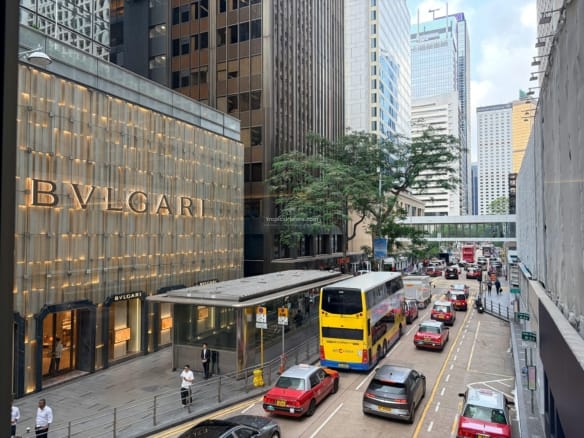
Global Wealth Strategy Guide Branded Residences and Portfolio Diversification for Global Investors For internationally active investors, the question is rarely just "is this a nice property." It is whether a branded residence earns its…

Off-Plan & Bulk Acquisition Strategy Why Investors Use Bulk Purchases in New Developments Buying multiple units directly from a developer is rarely about the discount. For sophisticated investors, it is an inventory-positioning exercise —…
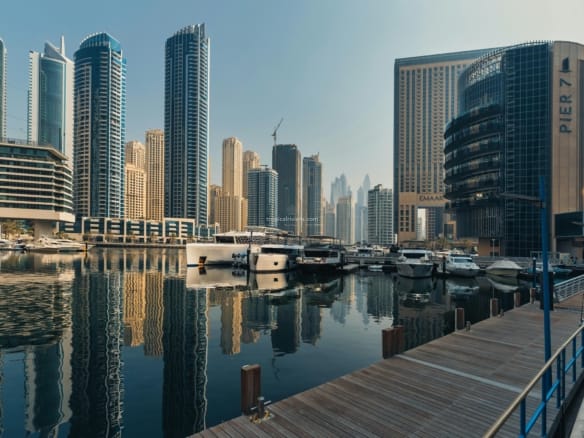
Why Sophisticated Investors Think in Portfolios, Not Properties From the Gulf to Europe and the Indian Ocean, sophisticated investors increasingly use bulk acquisitions to secure pricing leverage and diversify internationally. They are not simply…
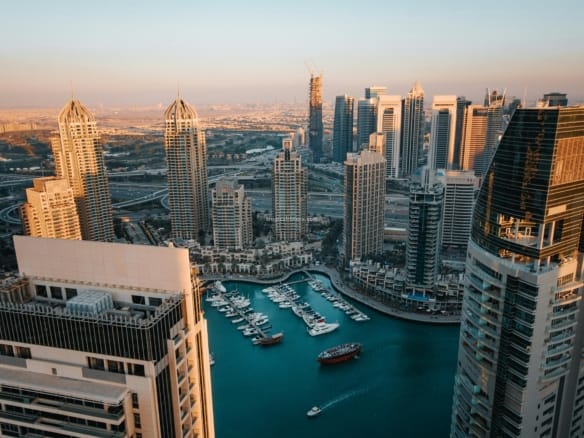
Reducing jurisdiction risk is rarely about finding a market with no risk. Serious investors generally understand that such a market does not exist. The exercise is usually about identifying risks that are intelligible, manageable…

Capital preservation is often discussed as though it belongs solely to the world of defensive securities, liquidity management and monetary hedging. Sophisticated investors have often approached it more broadly. For many, preserving wealth has…

How Global Investors Evaluate International Real Estate Beyond the Headlines International real estate is often discussed through the language of opportunity. Markets are presented through growth narratives, fiscal incentives or lifestyle appeal, while individual…
Contact Us
talk to you soon
