Smart City Mauritius: Foreign Ownership, Residency and Investment
A current guide to the Mauritius Smart City Scheme for foreign buyers, with a particular focus on completed property, resales, foreign-buyer eligibility, the USD 375,000 residence threshold, serviced-land rules, payment requirements and due diligence.
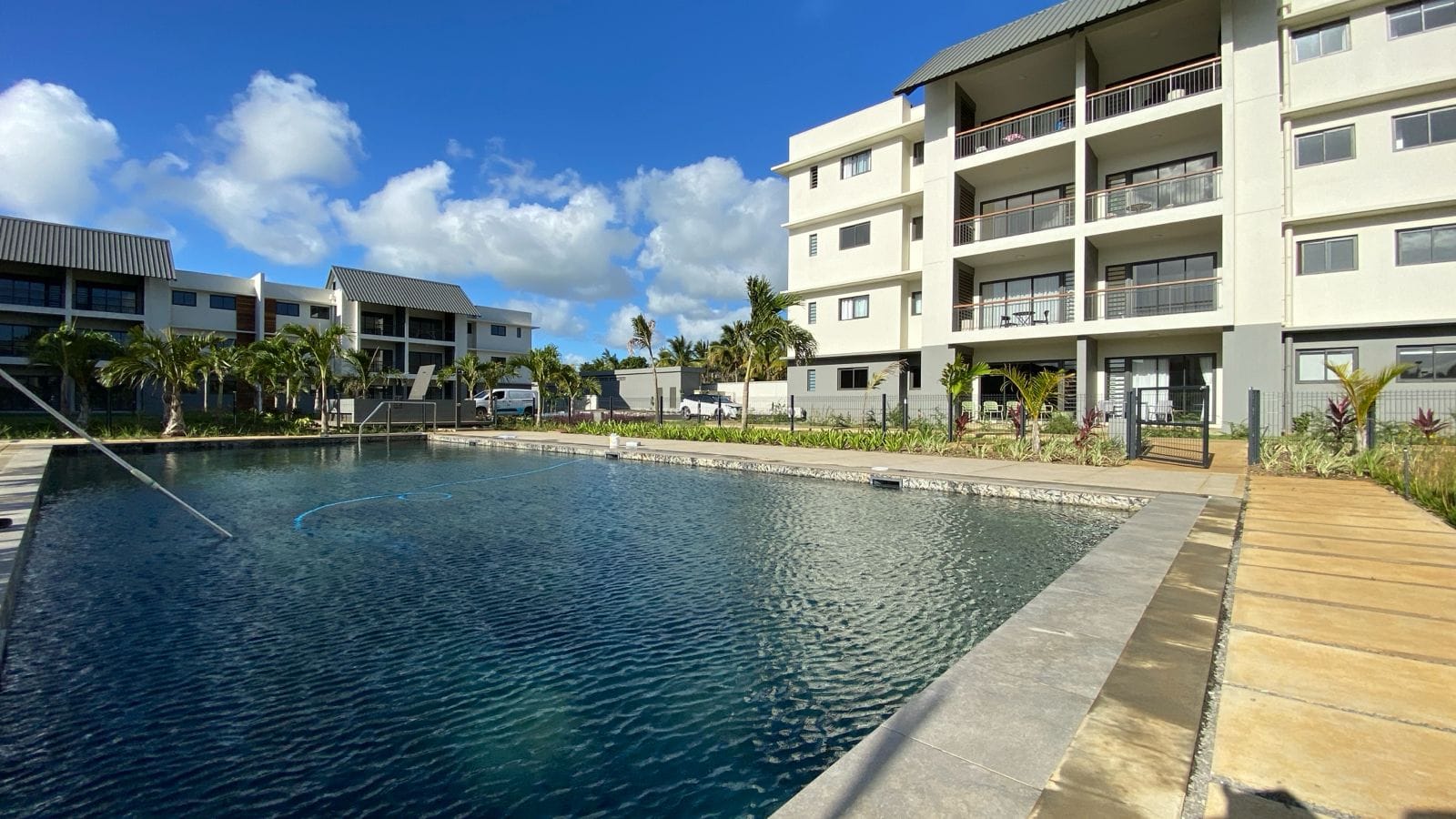
The Smart City Scheme is one of Mauritius's principal frameworks for large, mixed-use developments combining homes, business space, services, leisure and infrastructure. For a foreign buyer, its importance is practical: eligible built-up residential property inside an approved Smart City can be acquired by a non-citizen, and qualifying purchases may support residence in Mauritius. For buyers who prefer completed property, the resale market can also provide better visibility on the actual neighbourhood, service charges, management quality and real transaction values.
Smart City status does not mean that every asset inside the development is automatically available to every buyer. Apartments, villas, commercial premises and serviced plots can have different eligibility rules. The first step is therefore to identify the exact asset category and confirm the current acquisition route before a reservation is signed.
If you are still comparing the different foreign-ownership frameworks, start with our Foreigners Buying Property in Mauritius guide. For wider market context, see Understanding Mauritius Real Estate.
Smart City Scheme: The Key Points
What Is the Mauritius Smart City Scheme?
The Smart City Scheme was designed around an integrated "work, live and play" model rather than a conventional gated residential project. Smart Cities can include homes, offices, retail, education, healthcare, leisure, hospitality, public spaces and transport or technology infrastructure within a coordinated master plan.
For buyers, this can create a different investment profile from a stand-alone resort. The value proposition may depend not only on the residence itself, but on the surrounding commercial activity, schools, services, road access, public realm, management quality and the pace at which the wider city is delivered.
Can Foreigners Buy Property in a Smart City in Mauritius?
Yes. EDB's published Smart City guidelines state that any person, including a non-citizen, may acquire a built-up residential property under the scheme. The framework also permits acquisition through certain entities, including companies, sociétés, foundations, limited partnerships and trusts, subject to the applicable ownership and due-diligence requirements.
Importantly, the guidelines state that there is no general minimum purchase price for the acquisition of a built-up residential unit. This is different from the residence-permit threshold. A foreign buyer may therefore be able to acquire an eligible Smart City residence below USD 375,000 without that purchase necessarily producing property-linked residence rights.
Smart City Purchase Price vs Residence Permit Threshold
These two numbers are frequently confused in sales material. USD 375,000 should not be presented as the minimum price to buy every Smart City residence. It is principally important as the qualifying threshold for property-linked residence.
What Does Property-Linked Residence Provide?
EDB's published framework provides for residence where a non-citizen acquires qualifying residential property at the required value. The residence remains linked to ownership of the qualifying property. The guidelines also address eligible dependants, but family and work-right consequences should be confirmed against the immigration rules applying when the application is made.
Buyers should therefore separate three questions: whether they can legally acquire the property, whether the purchase meets the residence threshold, and what rights the resulting permit actually confers.
Can a Foreigner Buy a Serviced Plot in a Smart City?
This is where the 2026 date matters. The EDB Smart City guidelines contain a temporary provision under which certain non-citizens holding qualifying occupation, retirement, property-based residence or permanent residence status could acquire one serviced residential plot to build an individual house on or before 30 June 2026.
That date has now passed. The same published guidelines identify Mauritian citizens and members of the Mauritian Diaspora registered under the Diaspora Scheme as the continuing eligible purchasers of serviced residential plots.
This is different from buying qualifying built-up residential property, which remains expressly open to non-citizens under the published Smart City framework. For a wider discussion of land, see Can Foreigners Buy Land in Mauritius?
What Types of Property Can a Smart City Include?
| Asset type | Buyer relevance | What to verify |
|---|---|---|
| Apartments | Common foreign-buyer route for completed or off-plan residential ownership. | Specific unit eligibility, title structure, service charges, completion status and residence threshold. |
| Villas / townhouses | May be available as built-up residential property within an approved Smart City. | Plot/title structure, scheme approval, management obligations and future resale audience. |
| Serviced residential plots | Different rules from built-up property; the temporary non-citizen route was published only through 30 June 2026. | Current purchaser eligibility before making any commitment. |
| Commercial property | Smart Cities may contain offices, retail and other business premises. | Ownership route, business-purpose approval where required, zoning, lease terms and operating restrictions. |
| Mixed-use / hospitality | Can provide diversified investment exposure but may carry operator or management conditions. | Use rights, management agreement, rental rules, fees and resale conditions. |
Buying Smart City Property on the Resale Market
A Smart City purchase does not have to come directly from a developer. Completed apartments, villas and other eligible residential units may return to the market through resale, creating a different type of opportunity for foreign buyers.
Resales can be especially useful for buyers who want to evaluate an asset using evidence rather than launch-stage projections. The wider development is already visible, service charges are known, management quality can be assessed, neighbouring construction is easier to understand, and comparable asking or achieved prices may be available.
A resale still requires the same discipline around title, non-citizen eligibility, approval, source of funds and notarial review. Buyers should also examine the seller's acquisition deed, outstanding charges, syndic position, alterations to the unit, rental history where relevant and any restrictions affecting future transfer.
Tropical Riviera International Realty is not tied to a Smart City developer. Where suitable resale stock is available, our role is to help buyers compare completed units on their own merits rather than promote a development because it is newly launched.
Off-Plan Is Not the Only Route
Smart City residential property may be purchased completed, on the resale market, during construction or on plan. Buyers who prefer certainty may favour completed or resale stock, while an off-plan acquisition under VEFA or another future-delivery structure requires deeper review of construction risk, contractual milestones and developer delivery obligations.
The buyer should examine the developer's delivery record, building permit, guarantees, construction milestones, specifications, variation clauses, completion date, management structure and remedies for delay. Our dedicated Mauritius VEFA guide explains the off-plan framework in more detail.
Currency Rules for New Smart City Acquisitions
Since 13 December 2024, EDB regulations impose specific currency requirements on new acquisitions by non-citizens under the Smart City Scheme and the other principal EDB residential schemes.
EDB's FAQ on the amendments states that these rules apply to first sales under the covered schemes rather than resales. It also provides a local financing mechanism where the property price exceeds USD 750,000: the first USD 750,000 must come from the buyer's own transferred funds, while the balance may be financed locally subject to the prescribed conditions and bank approval.
How Is a Smart City Purchase Approved?
Since May 2025, EDB's Property Acquisition Management System (PAMS), hosted on the National E-Licensing platform, includes applications for acquisition of residential property under the Smart City Scheme. The practical transaction still involves the buyer, developer or seller, notary, banking/KYC process and the competent authorities.
- Confirm that the specific property is eligible for non-citizen acquisition.
- Review buyer identity, ownership structure and source of funds.
- Review reservation or preliminary documentation before paying a material deposit.
- Complete independent notarial title and document review.
- Submit the required Smart City property application through the applicable channel.
- Satisfy approval conditions before completion.
- Sign the authentic deed and complete registration.
Registration Duty and Transaction Costs
Buyers should calculate the transaction on the basis of the law applying on the deed date, not an old brochure. The published EDB Smart City guidelines show a 5% registration duty on residential acquisition. The 2025 legislation introduced a special higher rate for certain non-citizen EDB property transactions from July 2026, but the Finance Act 2026 subsequently repealed the special higher-rate paragraph and the corresponding special seller provision.
Because tax treatment can depend on the specific deed and amendments may take effect at different dates, the acting notary should confirm registration duty, notarial fees and any other applicable cost immediately before signing.
Rental and Resale
The published Smart City guidelines state that there is no scheme-level restriction on rental or resale of built-up residential units. That does not mean every property is operationally identical. Co-ownership rules, syndic regulations, short-term rental licensing, management agreements and individual project conditions may still affect how the property can be used.
From an investment perspective, buyers should assess the likely resale audience, completed infrastructure, occupancy of the wider city, rental demand, service charges and management quality rather than relying on the Smart City label alone.
How to Judge a Smart City Resale Properly
A Smart City resale should be judged as a real, operating asset rather than as a branded concept. The relevant questions are practical: is the unit easy to live in, what are the actual annual charges, how well is the estate maintained, what is still under construction, how liquid is the resale market and how does the price compare with completed alternatives?
Completed infrastructure matters. Occupied offices, functioning retail, schools, road connectivity, healthcare, leisure facilities and public spaces can support long-term value, but only where they exist in practice. A resale buyer has the advantage of being able to inspect much of this directly.
Smart City Due Diligence Checklist
Common Smart City Buyer Mistakes
- Assuming USD 375,000 is the minimum purchase price for every Smart City residence.
- Assuming a serviced plot remains available to foreigners after the 30 June 2026 temporary deadline.
- Assuming the entire development is foreign-eligible because the promoter has a Smart City certificate.
- Buying into a master plan without checking what has actually been delivered.
- Ignoring service charges, management structure and long-term estate costs.
- Using developer rental projections without checking comparable achieved rents.
- Signing a VEFA reservation without independent review of milestones and guarantees.
- Confusing property eligibility with automatic residence or work rights.
Start With Resale Evidence, Not Launch Marketing
Completed Smart City property gives buyers more evidence to work with: actual service charges, finished infrastructure, management quality, comparable units and a visible resale market. We assess those fundamentals before recommending any property.
Looking for a Smart City Resale in Mauritius?
Tell us the area, approximate budget and whether the objective is residence, relocation, rental income, capital preservation or a second home. We can search completed and resale opportunities and compare them against actual market evidence before you commit.
WhatsApp +230 5256 5725Send Us a Message
Your enquiry is treated confidentially and used only to respond to your property request.
Primary Sources
- Economic Development Board — Smart City Scheme Guidelines
- Economic Development Board — December 2024 property regulation amendments
- Economic Development Board — FAQ on mandatory currency and financing requirements
- Economic Development Board — Property Acquisition Management System (PAMS)
- Mauritius National Assembly — Finance Act 2026
Smart City Mauritius FAQ
Can foreigners buy property in a Mauritius Smart City?
Yes. EDB guidelines state that non-citizens may acquire eligible built-up residential property under the Smart City Scheme, subject to the applicable approval process.
What is the minimum price to buy a Smart City residence?
The published EDB Smart City guidelines state that there is no general minimum purchase price for an eligible built-up residential unit.
Is USD 375,000 the Smart City minimum purchase price?
No. USD 375,000 is important for property-linked residence eligibility. It should not be confused with a universal minimum acquisition price for built-up Smart City residential property.
Can Smart City property give a foreign buyer residence in Mauritius?
A qualifying residential acquisition meeting the applicable USD 375,000 threshold may support property-linked residence under the Smart City framework, subject to the current immigration rules.
Can a foreigner still buy a serviced plot in a Smart City?
The published EDB guidelines allowed certain qualifying non-citizen permit holders to buy one serviced plot only on or before 30 June 2026. That deadline has passed, so a foreign buyer should obtain current EDB and notarial confirmation rather than assume that the former route remains available.
Can foreigners buy Smart City apartments below USD 375,000?
Potentially yes, if the specific built-up residential unit is eligible for non-citizen acquisition. A purchase below the property-linked residence threshold would not qualify on price alone for the corresponding residence route.
Can Smart City property be rented out or resold?
The published Smart City guidelines state that there is no scheme-level restriction on rental or resale of residential units, but project rules, management agreements, co-ownership regulations and applicable rental licensing still need to be checked.
Can a foreign company buy Smart City residential property?
The EDB guidelines allow built-up residential property to be acquired through certain entities, including domestic or foreign companies and other recognised structures, subject to the applicable ownership, KYC and approval requirements.
What is the 85/15 Smart City payment rule?
For covered new acquisitions by non-citizens, funds are transferred from abroad in hard convertible currency and the notary transfers 85% of the consideration to the promoter in Mauritian rupees, with the remaining 15% payable in foreign currency or Mauritian rupees.
Can I finance a Smart City property through a Mauritian bank?
Local financing may be possible. For covered first-sale acquisitions above USD 750,000, EDB's amended rules require the first USD 750,000 to come from the buyer's own transferred funds, with the balance potentially financed locally subject to the conditions and bank approval.
How do I apply to buy Smart City property?
EDB's Property Acquisition Management System on the National E-Licensing platform includes applications for acquisition of residential property under the Smart City Scheme. The transaction should be coordinated with the developer or seller and the acting notary.
Is a Smart City resale better than buying directly from a developer?
Not automatically, but a resale can give the buyer more evidence: the property is completed, service charges are known, management quality can be assessed, surrounding infrastructure can be inspected and comparable resale pricing may be available. The better option depends on price, condition, ownership route and the buyer's objective.