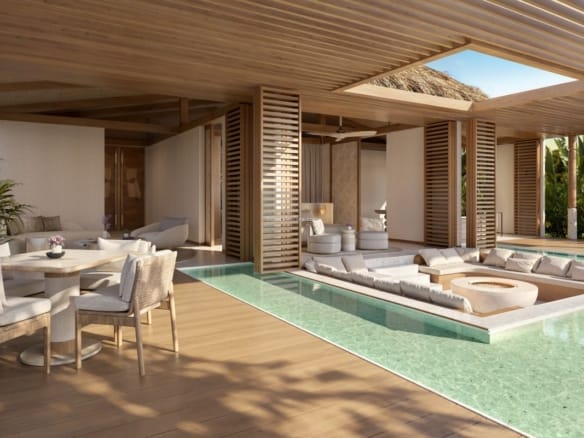
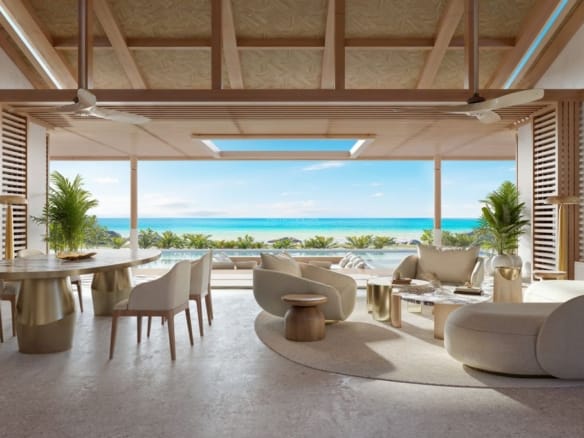
Branded resort developments attract strong interest in the Maldives real estate market. Many international buyers prefer projects linked to recognised hospitality or lifestyle brands instead of independent resorts. This preference comes from structure, visibility and long-term positioning rather than marketing alone.
In a country where land supply remains limited and development approvals stay tightly controlled, branding often plays an important role in how investors evaluate risk and value.
Understanding why branded resorts hold value helps buyers compare projects more accurately.
What Is a Branded Resort Development
A branded resort development is a project delivered in partnership with an international hotel, hospitality or lifestyle brand. The brand usually licenses its name and design standards to the developer. In many cases, the brand also participates in management or operational oversight.
This structure creates a unified concept across the entire resort. Architecture, services, facilities and marketing follow a defined framework instead of evolving randomly over time.
Because of this consistency, branded projects often appeal to foreign buyers who want a clear investment structure.
Why Branding Matters in the Maldives
The Maldives operates under strict land and tourism regulations. New resort approvals remain limited, and each island represents a controlled development opportunity. Because supply stays restricted, buyers often focus on projects that show strong long-term positioning.
Brand association can support this positioning in several ways.
First, branding increases international visibility. Projects linked to recognised names reach a wider global audience. This can make resale easier because more buyers understand the product.
Second, branding usually requires higher construction and operating standards. Developers must follow specific guidelines, which can improve consistency across the project.
Third, branded resorts often attract stronger marketing support. Global networks help promote the development beyond the local market.
These factors do not guarantee performance, but they can influence how the market perceives value.
Limited Land Supply Supports Stronger Positioning
One of the main reasons branded resorts hold value in the Maldives is the country’s geography. The number of islands suitable for development remains limited, and environmental regulations restrict large-scale construction.
Because of this, new luxury resorts do not appear every year. When a branded project enters the market, it competes with only a small number of similar developments.
This limited supply can support long-term positioning, especially when the project sits in a recognised tourism corridor such as North Malé Atoll.
Investors often prefer these locations because they combine accessibility, infrastructure and global recognition.
Why Foreign Buyers Prefer Structured Projects
Foreign buyers usually enter the Maldives market through licensed resort developments rather than private land purchases. The legal framework requires most international investment to take place inside approved tourism projects.
Branded resorts often provide clearer documentation and a more organised structure. Buyers can review the SPA, the lease framework and the operating model before committing.
This transparency makes the project easier to understand, especially for investors who live outside the country.
When buyers compare different resorts, they often choose the one with the clearest legal and operational structure rather than the one with the most marketing.
Hospitality Integration and Long-Term Appeal
Another reason branded resorts attract investors is the integration of hospitality services. These developments usually operate as full resort environments instead of simple residential communities.
Owners may benefit from shared facilities, professional management and unified maintenance standards. This can help preserve the overall condition of the project over time.
In markets driven by tourism, such as the Maldives, this type of structure often supports long-term appeal.
Projects that maintain consistent quality tend to remain attractive to both buyers and visitors, which can influence resale demand.
Location Still Matters More Than Branding
Branding alone does not determine value. Location, legal structure and developer credibility remain equally important.
In the Maldives, resorts close to Velana International Airport often attract stronger demand because access stays simple for international travellers. North Malé Atoll continues to be one of the most recognised resort zones for this reason.
When branding combines with a strong location and a clear legal framework, the project usually becomes easier to position in the global market.
Buyers should always evaluate all three factors together.
Example of Branded Resort Positioning in the Maldives
Recent projects in the Maldives show how branding, location and legal structure work together. Developments delivered by international developers in partnership with global brands often follow a master-planned format rather than independent construction.
Projects such as Trump International Hotel & Resort Maldives illustrate this model. The development forms part of a coordinated private island resort rather than a standalone villa project, and ownership is structured within the framework used for foreign investment in the Maldives tourism sector.
This type of positioning explains why many international buyers focus on branded resort developments when entering the market.
What Investors Should Check in Any Branded Resort
Before buying in a branded project, investors should review the same fundamentals as with any other resort development.
ownership structure
lease duration
SPA conditions
developer credentials
management framework
usage rules
exit conditions
Branding can improve visibility, but the legal structure always matters more than the name.
Careful review of documentation remains essential for every foreign purchase.
Conclusion
Branded resorts often hold value in the Maldives because the market operates under limited land supply, strict development control and a tourism-driven economy. Projects linked to recognised brands usually follow clearer planning standards and attract stronger international visibility.
For foreign investors, these factors can make branded developments easier to understand and easier to position in the long term. However, buyers should always evaluate location, legal structure and developer credibility before making any decision.
When these elements align, branded resort projects can represent one of the most structured ways to enter the Maldives real estate market.
Branded Resort Investment in the Maldives – FAQ