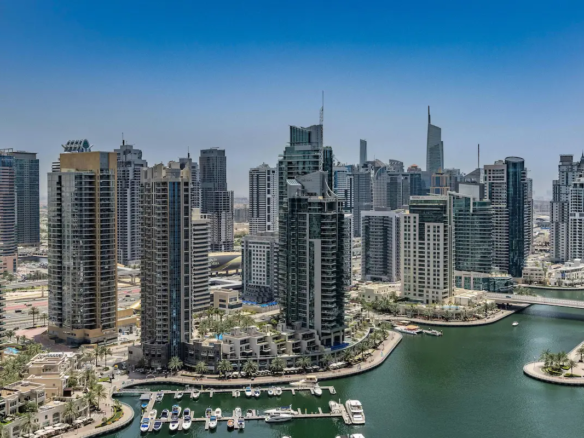
Where International Buyers Are Deploying Capital — and Why It Matters
International real estate has entered a phase of structural transformation. What was once driven by lifestyle or secondary home ownership is now increasingly defined by capital allocation across regulated jurisdictions.
Across markets such as Maurice, the United Arab Emirates ( Dubai & Al Marjan Island ) , Oman, Saudi Arabia, Qatar, Espagne, Indonésie, Tanzanie and the Maldives, governments have actively repositioned real estate as a channel for foreign direct investment. This is achieved through controlled ownership frameworks, residency-linked incentives, and master-planned developments designed to attract international buyers.
This shift aligns with macroeconomic positioning consistently highlighted by institutions such as the Banque mondiale, le OCDE et le Fonds monétaire international. These organisations identify real estate as a core driver of capital inflows, infrastructure expansion, and long-term economic diversification.
For investors, the implication is clear:
Real estate is no longer local. It is structured within a global financial and regulatory system.
Global Capital Flows Are Strategic, Not Accidental
International capital does not move randomly between real estate markets. It concentrates in jurisdictions that combine legal clarity, macroeconomic stability, and demand drivers such as tourism or business inflows.
Le OCDE has repeatedly emphasised the link between international tourism flows and real estate performance. Markets with sustained inbound travel typically benefit from stronger rental demand, particularly in resort and coastal locations.
This explains why specific destinations consistently attract international buyers:
- Le United Arab Emirates ( Dubaï et Al Marjan ) combines a USD-pegged currency environment, tax efficiency, and mature freehold ownership systems
- Maurice offers political stability, structured foreign ownership schemes, and sustained demand from European and regional buyers
- Oman is emerging through Integrated Tourism Complex frameworks such as AIDA, positioning itself as a controlled yet high-quality market
- Arabie Saoudite is undergoing long-term transformation under Vision 2030, aligning real estate with large-scale economic reform
- Tanzanie (Zanzibar) benefits from strong tourism growth and limited beachfront supply
- Indonésie (Bali) remains a yield-driven market supported by international visitor demand
These are not interchangeable markets. They serve different roles within a global portfolio.
Entering a Market Means Entering a Legal System
A fundamental reality of international real estate is that each acquisition is governed by a jurisdiction-specific legal framework.
A property in Espagne is held under full freehold ownership within a well-established EU-aligned legal system.
Dans Oman, foreign ownership is restricted to Integrated Tourism Complexes, ensuring participation within approved developments.
Dans Maurice, non-citizen ownership is limited to defined schemes such as IRS, RES, PDS and Smart City projects.
These frameworks act as regulatory filters.
They define:
- Where foreign buyers can purchase
- What type of property can be owned
- How ownership is registered and transferred
Markets with clear frameworks tend to offer stronger long-term stability, clearer resale conditions, and greater legal enforceability.
Branded Residences: Institutionalising Residential Real Estate
The rise of branded residences reflects the globalisation of real estate.
Buyers operating across jurisdictions require consistency, operational reliability, and recognisable standards. This is where global hospitality groups have reshaped the asset class.
Developments associated with Marriott International, Organisation Trump, Anantara Hotels et Taj Hotels operate within structured frameworks that extend beyond branding.
They introduce:
- Professional asset management
- Integrated rental programs
- Global marketing exposure
- Standardised service levels
This transforms real estate into a managed asset class, rather than a standalone property.
In markets such as Dubai, Ras Al Khaimah, AIDA Muscat and Zanzibar, branded residences are no longer niche — they are increasingly central to market performance.
Off-Plan Property: Structured Entry Into Prime Inventory
Off-plan acquisition is one of the most widely used strategies in international real estate, particularly in markets such as the Émirats arabes unis, Oman et Maurice.
Rather than requiring full upfront capital, these transactions are structured through staged payment frameworks aligned with construction progress.
Typical structures include:
- Reservation deposit (approximately 10%–20%)
- Instalments linked to construction milestones
- Final payment upon completion
In regulated jurisdictions, these payments are governed by contractual safeguards. In the UAE, escrow account systems ensure that funds are released only as construction progresses. In Mauritius and Oman, developments operate within approved frameworks tied to land registration, developer compliance, and buyer eligibility.
This creates a controlled investment environment where:
- Capital deployment is phased
- Entry pricing is typically more favourable
- Risk is aligned with verified construction progress
The key variable remains the developer and the regulatory framework — not the payment plan itself.
Transaction Security: Defined by Process, Not Perception
The security of an international real estate transaction is determined by the integrity of its structure.
A properly executed transaction includes:
- Buyer verification (KYC and source of funds)
- Reservation agreement issued by the developer
- Legally binding Sales & Purchase Agreement (SPA)
- Bank-traceable payment process
- Registration of ownership or title
In markets such as the UAE, Spain and Mauritius, ownership is recorded within official land registries, providing legal recognition and enforceability.
In other jurisdictions, additional structuring may apply, including leasehold systems or approved investment frameworks.
The defining principle is simple:
Security is not a feature. It is a system.
How Sophisticated Investors Approach International Real Estate
Experienced investors do not evaluate properties in isolation. They assess jurisdictions, structures, and outcomes.
A beachfront villa in Zanzibar, a branded apartment in Dubai, and a resort residence in Oman are not competing assets. They represent different functions within a portfolio.
Key considerations include:
- Legal framework and ownership rights
- Currency exposure and macro stability
- Market maturity and liquidity
- Crédibilité du développeur
- Exit strategy (resale, rental, or long-term holding)
This approach reflects a shift from transactional buying to portfolio-level thinking.
From Single Assets to Multi-Jurisdiction Portfolios
International buyers are increasingly building diversified portfolios across multiple markets.
A typical allocation may include:
- A USD-denominated asset in Dubai or Ras Al Khaimah
- A residency-linked investment in Mauritius
- A tourism-driven income property in Zanzibar or Bali
- A long-term capital position in Saudi Arabia
This diversification reduces exposure to a single economy and aligns with broader global capital allocation strategies.
Our Role: Cross-Border Real Estate Advisory
At Tropical Riviera International Realty, we operate within this international framework.
Our positioning is supported by:
- Membership with the National Association of REALTORS
- Certified International Property Specialist (CIPS) designation
- Licensed brokerage operations in Mauritius
- Direct collaboration with developers across multiple jurisdictions
We focus exclusively on regulated markets, approved developments, and structurally sound opportunities.
Each acquisition is assessed based on:
- Legal clarity
- Market positioning
- Crédibilité du développeur
- Exit visibility
In international real estate, access is widely available.
Correct structuring is not.
Strategic Internal Linking (Ranking Engine)
To push your listings and pages back up, embed these anchors naturally in the article:
- buy property in Mauritius as a foreigner → Understanding Mauritius
- invest in Oman real estate ITC zones → Oman page
- Ras Al Khaimah property investment opportunities → RAK page
- Dubai branded residences for sale → Dubai listings
- Zanzibar beachfront property investment → Zanzibar page
These links distribute authority and reconnect your listings to a strong topical hub.
Global Real Estate Investment – Frequently Asked Questions
International real estate can be a secure investment when the acquisition takes place within a regulated framework. The real protection comes from clear ownership rules, proper due diligence, bank-traceable payments, enforceable contracts, and official title or registry recognition. Buyers should always assess the legal structure of the market before focusing on price or marketing.
Many countries allow foreign ownership, but rarely without conditions. In practice, foreign buyers usually purchase within defined frameworks such as freehold zones, integrated tourism complexes, government-approved schemes, or long leasehold structures. The exact rules depend on the jurisdiction, the asset type, and the location of the property.
The strongest markets usually combine legal clarity, political stability, reliable land registration systems, regulated developer activity, and transparent transaction procedures. A market becomes more secure when ownership rights are clearly recognised, transfers are documented, and payments follow formal banking and contractual channels.
Most off-plan structures begin with a reservation deposit, followed by staged instalments linked to construction progress, and a final balance on completion or handover. This approach allows buyers to spread capital deployment over time instead of paying the full amount at the start. The exact percentages vary by project and jurisdiction.
Off-plan investment is not inherently unsafe, but the quality of the developer, the contractual framework, and the regulatory environment are decisive. Risk is lower when the project sits within an approved development, payments are milestone-based, and the developer has a credible delivery track record.
Buyer protection depends on the market. In stronger jurisdictions, safeguards can include escrow-style arrangements, milestone-linked disbursements, formal sales and purchase agreements, government approvals, and title or land registration systems. These mechanisms help align payments with verified project progress rather than marketing promises alone.
Branded residences appeal to global buyers because they combine real estate ownership with established hospitality or luxury standards. Buyers are not only purchasing a property, but also a management framework, a recognisable brand, and a stronger resale narrative. This can improve confidence, rental positioning, and long-term marketability.
In many international markets, branded residences benefit from stronger visibility, more consistent management, and better demand from cross-border buyers. While every project must still be assessed individually, branded assets often hold a stronger position in premium coastal, urban, and resort-driven locations.
Yes, many international buyers target property for income as well as capital preservation. Rental performance depends on the location, the asset type, the management structure, tourism or business demand, and whether the property is positioned for short-stay, long-stay, or hybrid occupancy.
Most transactions require identification documents, proof of address, source of funds information, and completed know-your-client documentation. Depending on the country, buyers may also need tax information, reservation forms, legal declarations, or authority approvals linked to foreign ownership rules.
Some jurisdictions offer residency or long-stay benefits linked to real estate investment, but this depends entirely on local law, minimum investment thresholds, and the type of property acquired. Buyers should always distinguish between ownership rights and immigration rights, as they are not automatically the same.
The decision should be based on the buyer’s objective. Some markets are stronger for residency, some for short-term rental performance, some for USD exposure, and others for long-term capital appreciation. The right jurisdiction is the one that matches the buyer’s legal comfort, financial strategy, and exit horizon.
Dubai remains highly relevant because it combines global visibility, tax efficiency, a USD-pegged currency environment, mature freehold zones, and strong international demand. For many buyers, it functions as both a real estate market and a broader regional capital allocation base.
Mauritius continues to attract foreign buyers because it combines political stability, an established legal framework, structured foreign ownership schemes, and lifestyle appeal. It also remains one of the more recognisable Indian Ocean markets for buyers seeking a regulated acquisition environment.
Oman is drawing more attention because it offers a more controlled ownership model through integrated tourism complexes, while also benefiting from high-quality master-planned projects, strong coastal positioning, and a market that still feels earlier in its international growth curve than some neighbouring destinations.
Zanzibar is increasingly viewed as both. It has strong lifestyle appeal, but it also benefits from tourism demand, beachfront scarcity, and growing international visibility. As with any emerging market, investors should focus carefully on legal structure, operator strength, and exit visibility.
Exit strategy is critical. Buyers should assess from the start whether the asset is likely to perform through resale, rental income, long-term holding, or personal use. A property may look attractive at entry, but if resale demand, legal transferability, or operational demand are weak, the investment case becomes much less compelling.
The most common mistakes include focusing only on price, underestimating the legal structure, trusting unverified marketing claims, ignoring transaction mechanics, and buying in a market they do not properly understand. In international real estate, weak structuring usually creates more problems than high pricing.
Not always. Many transactions begin remotely through video presentations, documentation review, and reservation procedures. However, site visits remain valuable where possible, especially for buyers comparing multiple projects or assessing location quality, surrounding infrastructure, and brand positioning.
Project marketing focuses on selling a specific development. Cross-border advisory focuses on whether the acquisition is properly structured for the buyer’s objectives. That includes comparing jurisdictions, assessing ownership frameworks, reviewing transaction safety, and understanding how the asset fits into a broader portfolio strategy.