Inheritance and succession planning for foreign-owned Dubai property.
If you own Dubai property and die without a registered will, your estate does not automatically pass the way it would at home. UAE personal status law governs the default outcome, joint ownership does not mean automatic survivor inheritance, and the property can be frozen pending a court order — sometimes for months.
The good news: for non-Muslim owners, the fix is well-established and relatively inexpensive. This guide covers what happens without a will, the DIFC Wills Service Centre route most expat owners use, and the ownership pitfalls worth knowing before you buy.
- No will = default UAE succession rules apply to your Dubai property
- Joint ownership ≠ automatic inheritance — the deceased's share is separated, not passed to the surviving co-owner automatically
- DIFC Wills Service Centre lets non-Muslim owners register a will under common-law principles
- Registration can be completed remotely, in most cases via video call
- Without a will, the property is typically frozen until a court order is issued
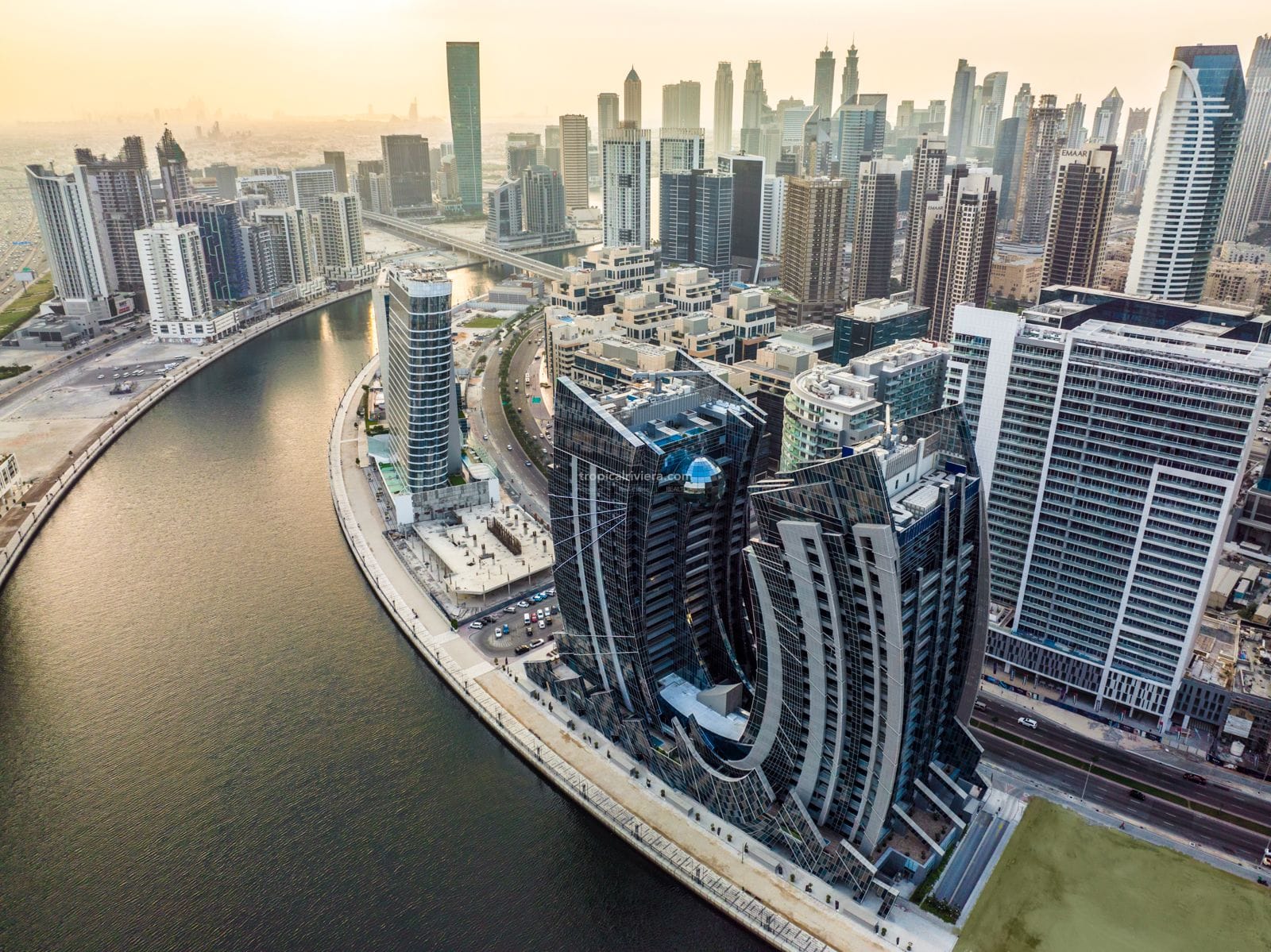
What happens if you die without a will
UAE personal status law governs succession for assets located in the UAE, including Dubai real estate — regardless of where you're a citizen or resident.
Historically, the default position for all residents applied Sharia inheritance principles. Federal Decree-Law No. 41 of 2022 introduced a dedicated framework for non-Muslim personal status matters, and reporting through 2026 describes further reform to the default distribution shares that apply when a non-Muslim dies without a will. Exactly how the current default divides an estate is genuinely one of the more actively revised areas of UAE personal status law, and reputable sources do not fully agree on the current mechanics. What is consistent across every source: the outcome without a registered will is decided by statute, not by your wishes — which is why the practical answer doesn't hinge on knowing the exact default.
The DIFC Wills Service Centre
A joint initiative of the Dubai government and the DIFC Courts, established in 2014 and reaffirmed by subsequent Dubai law, giving non-Muslim owners a common-law route to register an enforceable will.
| Will type | Covers | Approx. registration cost |
|---|---|---|
| Full Estate Will | All UAE assets and guardianship provisions in one document | ~USD 1,400 (government fee only, excludes legal drafting) |
| Real Property Will | Dubai real estate specifically, as a single-asset-category will | ~USD 840 (government fee only) |
Registration can typically be completed remotely via video call, and an optional annual maintenance service (~USD 200/year) is available to keep the will current. Dubai law has since granted DIFC-registered wills direct enforcement authority for Dubai-located assets, which streamlines the probate process compared to the standard court route.
Joint ownership does not mean automatic survivor inheritance
Many buyers assume that if a property is jointly owned — with a spouse, for example — the surviving co-owner automatically inherits the deceased's share. Under UAE default rules, that's not the case: the deceased's share is treated as part of their estate and distributed according to the applicable succession rules, not passed automatically to the co-owner.
This matters most for couples buying together without a will in place — the surviving spouse can end up needing court authorisation to deal with a share of a property they already partly own.
- A jointly-owned property cannot typically be sold or transferred until a court order is issued following the deceased's share of the estate
- A registered DIFC will can specify the surviving co-owner as beneficiary directly, avoiding this gap
- This applies regardless of the ownership structure — individual, joint, or through a company where beneficial ownership passes on death
What if you hold property in more than one emirate
The primary registry for non-Muslim wills governing Dubai-located real estate and other assets.
A parallel common-law framework for Abu Dhabi freehold property, operating on similar principles to DIFC.
Buyers with property across Dubai and Abu Dhabi often need both a DIFC will and an ADGM will — confirm coverage with counsel rather than assuming one covers both.
Why this matters more at higher price points

Ultra-prime holdings — DO Hotels & Residences, Dubai Islands
At this tier, a frozen estate isn't just an inconvenience — it can hold up a family's access to a meaningful share of their wealth for months. This is where DIFC trust structures (covered in our offshore company and trust guide) often work alongside a will, not instead of one.

Family homes bought jointly — Laguna Residence, Tiffany & Cyan Towers
Couples buying a family residence jointly are exactly the profile most exposed to the joint-ownership gap — a DIFC will naming the surviving spouse directly closes it for a modest, one-time registration cost.

Off-plan buyers — Orvessa Residences
Succession planning is easy to defer on an off-plan purchase since title doesn't transfer for some time — but registering a will alongside the purchase, rather than after handover, avoids the gap being forgotten entirely.
Succession planning is one piece of a wider purchase decision alongside ownership structure, financing, and freehold zone eligibility. For the full buying process, see our Dubai investment guide et le Dubai ownership framework.
A licensed international advisory built on formal professional standards
Tropical Riviera International Realty is a licensed international real estate advisory. Bhavesh Koonja, our principal broker, holds both the REALTOR® and Certified International Property Specialist (CIPS) designations through the National Association of REALTORS® — credentials that carry a formal code of ethics and fiduciary standard, not just a sales licence, and that apply to how we advise wherever we practice internationally.
We flag succession planning as part of the buying conversation, not as an afterthought, and coordinate introductions to independent UAE legal counsel for DIFC will registration and broader estate structuring. See our Immobilier international overview and Conseil immobilier international approach for how this fits our wider ten-market coverage.
Contactez-nous maintenant via WhatsApp (+230 5256 5725)- REALTOR® (AGENT IMMOBILIER) — National Association of REALTORS®
- Spécialiste certifié de la propriété internationale (CIPS) — NAR designation
- Bilingual — English and French advisory
- Ten markets served — Mauritius, Oman, UAE, Qatar, Saudi Arabia, Spain, Bali, Zanzibar
Dubai property inheritance FAQ
What happens to my Dubai property if I die without a will?
Your estate is distributed according to UAE personal status law rather than your personal wishes, and the property is typically frozen until a court order is issued. The exact default distribution rules for non-Muslim owners are an actively evolving area of UAE law — registering a will removes the uncertainty regardless of the current default.
What is the DIFC Wills Service Centre?
A joint initiative of the Dubai government and the DIFC Courts, established in 2014, that allows non-Muslim owners to register a will under common-law principles governing their UAE-located assets, including Dubai real estate.
If my property is jointly owned with my spouse, do they automatically inherit my share?
No. Under UAE default rules, the deceased's share is treated as part of their estate and distributed according to applicable succession rules rather than passing automatically to the surviving co-owner. A registered will naming the co-owner as beneficiary closes this gap.
Can I register a DIFC will remotely, before moving to Dubai?
In most cases, yes — registration can typically be completed via video call, and DIFC wills are available to non-residents as well as residents.
Do I need a separate will if I also own property in Abu Dhabi?
Generally yes. DIFC wills primarily cover Dubai-located assets; Abu Dhabi freehold property is typically covered by a separate will registered through the ADGM Wills Service. Confirm coverage with independent legal counsel if you hold property across multiple emirates.
Is a will from my home country enough to cover my Dubai property?
Not automatically. A foreign will is not automatically recognised under UAE law for UAE-located assets, even if it's valid where it was made. A UAE-registered will — through DIFC or ADGM as appropriate — is generally needed to govern UAE assets specifically.
Make succession planning part of your purchase, not an afterthought
Tell us about your ownership structure — individual, joint, or corporate — and we'll flag what to coordinate with legal counsel before or alongside your purchase.
WhatsApp — Commencer la conversation