Branded Residences as a Global Real Estate Asset Class
Branded residences investment has become part of a much broader discussion among internationally active buyers, family offices and wealth advisers — one that goes beyond luxury hospitality names and into questions of asset quality, resilience and long-duration relevance.
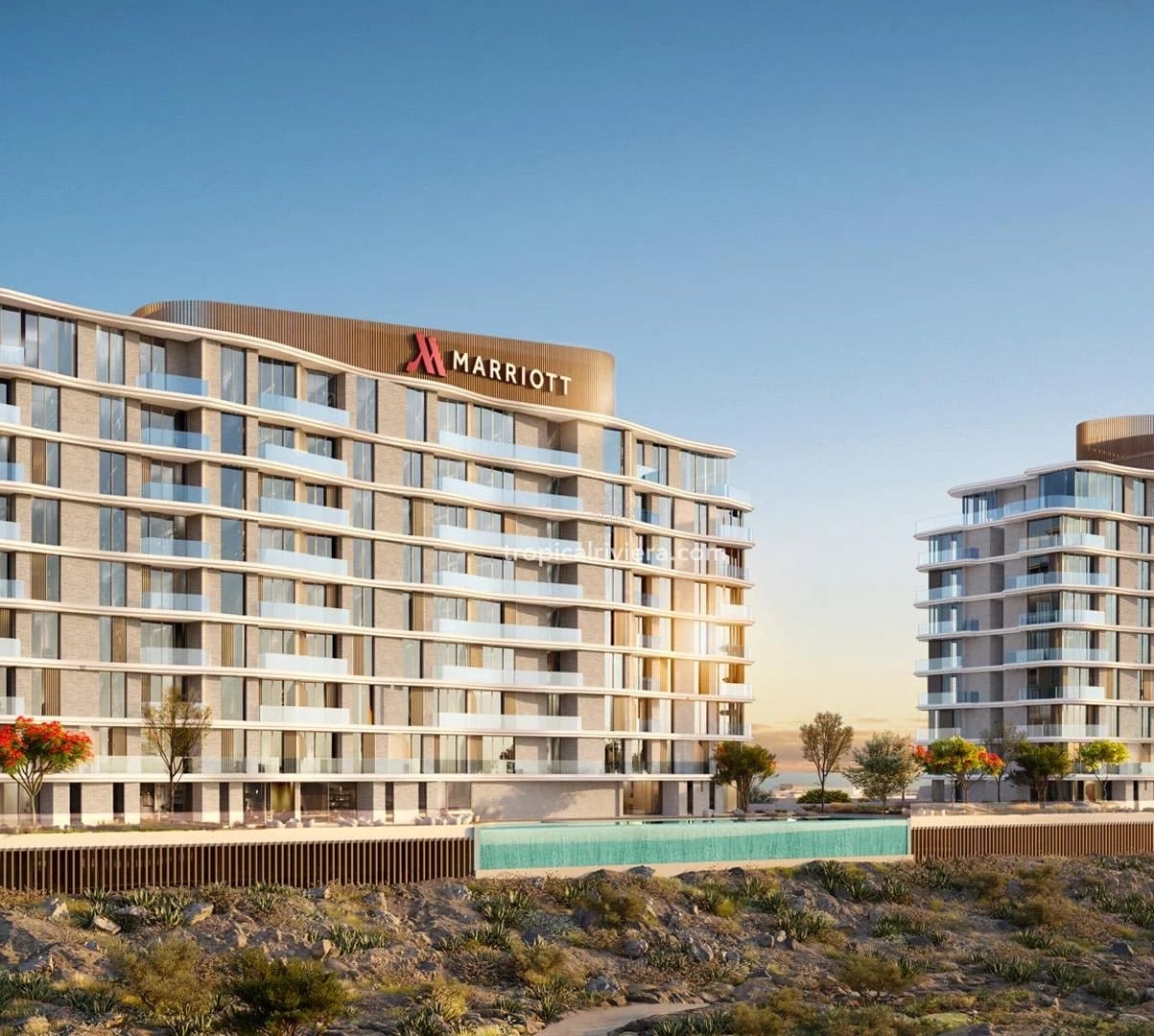
These assets are no longer viewed solely as prestige-led homes associated with luxury hospitality names. In stronger cases, they are examined as part of a wider real estate strategy — and some investors are asking a deeper question: whether certain branded residences may represent differentiated real assets rather than simply prestige-led homes.
That shift has structural context. According to Knight Frank, the global branded residences sector has expanded severalfold over the past decade, while Savills has continued to document premiums over comparable non-branded prime assets in many markets. Broader research from the Knight Frank Wealth Report and UBS Global Wealth Report has repeatedly highlighted prime real estate as an enduring component of global wealth allocation. Those reference points do not make every branded residence attractive — but they help explain why the segment increasingly attracts more serious analysis.
Résumé exécutif
Why Branded Residences Attract Global Capital
Part of the answer lies in how some branded residences combine characteristics that are often difficult to find together. In stronger projects, prime positioning, supply discipline, professionally managed ownership structures and broad international buyer recognition may coexist within a single acquisition. That combination matters because serious capital often seeks assets where scarcity and structure reinforce one another.
This is partly why branded residences investment sometimes appears in conversations that go beyond luxury consumption. It may intersect with how internationally mobile capital thinks about positioning wealth across jurisdictions and asset types — a theme we unpack more directly in Branded Residences and Portfolio Diversification for Global Investors.
Global private wealth trends continue to support it. Knight Frank has repeatedly reported growing cross-border ownership interest among ultra-high-net-worth buyers, while wider OECD and World Bank work on institutional quality has long reinforced how governance, legal clarity and market credibility can support investment confidence over long horizons.
Why Brand Alone Rarely Creates Investment Quality
One of the recurring misunderstandings in this sector is the belief that a recognised luxury name, by itself, creates investment strength. Disciplined investors rarely begin there. They usually begin with the underlying real estate — asking whether the asset occupies genuinely scarce real estate, whether the location has enduring relevance, whether demand appears likely to remain resilient through cycles, and whether the property would still command serious attention independent of branding.
Why Operating Structure Can Matter
Another reason serious buyers analyse branded residences investment differently is that certain projects introduce an operating dimension that may influence long-term asset behaviour. The durability of management, stewardship and governance may affect confidence in ways ordinary residential underwriting does not always capture.
Institutional investors have long understood that operating quality can affect asset performance across multiple sectors. Increasingly, internationally active buyers appear to apply similar reasoning here. Those factors may not guarantee value, but they may influence how value is sustained — and serious investors care about precisely that.
Why Scarcity Can Support Branded Residences Investment
Scarcity in this segment is often misunderstood as merely limited inventory. In practice, some branded residences derive scarcity because genuinely comparable alternatives are rare. Research across ultra-prime markets has often suggested that irreplaceability may support value as much as simple supply shortage. That principle may help explain why some branded residences are benchmarked less against conventional luxury apartments and more against a narrower universe of globally comparable assets.
For sophisticated buyers, that can alter how an asset is valued — not because scarcity alone creates quality, but because differentiated supply can support long-term relevance. That is often where serious interest begins.
Why Resale Dynamics Matter
Disciplined investors often devote at least as much attention to exit logic as entry pricing, particularly where long-duration relevance matters. Many serious buyers assess whether an asset is likely to remain differentiated as competing inventory emerges, whether the brand may continue supporting buyer recognition in secondary markets, and whether the ownership structure supports confidence over time.
This is why sophisticated investors often analyse durability rather than launch excitement — that tends to be the stronger framework, and often the more revealing one.
Are Branded Residences Becoming A Global Asset Class?
There is growing evidence that parts of the market are evolving into a recognisable segment within prime global real estate. Not a separate institutional asset class in the strictest sense, but a segment attracting differentiated pricing logic, specialised demand and increasingly nuanced underwriting. Knight Frank now tracks branded residential activity across dozens of brands and scores of countries, illustrating not merely growth but increasing segmentation inside the category itself.
Sophisticated investors rarely ask whether branded residences as a whole are attractive. They usually ask which branded assets may justify being analysed differently from ordinary prime stock. That is usually the more serious question.
A Wider Universe Of Branded Residences Is Reshaping The Category
Part of what makes branded residences investment increasingly compelling is that the sector is no longer defined by a narrow group of legacy hospitality products. It has evolved into a much broader universe of differentiated assets, ranging from family-oriented resort communities to ultra-prime branded trophy residences and investment-led coastal developments.
Current international examples illustrate that evolution clearly: family-oriented and golf-front branded product within Oman's AIDA masterplan, resort-led branded residences in Ras Al Khaimah, urban freehold branded towers in Dubaï, Vision 2030-linked branded urban development in Arabie Saoudite, beachfront branded resorts in Zanzibar et Maurice, and design-led branded residences in Bali. For the full project-by-project breakdown across all of these markets, see our roundup of branded hotel residences across the Middle East and East Africa.
That diversity is precisely why serious buyers increasingly underwrite the sector asset by asset, rather than making broad assumptions about branded residences as a whole.
Fundamentals First, Structure Second, Branding Third
Some projects may offer little beyond premium marketing. Others may represent differentiated real estate supported by scarcity, operator credibility, international buyer relevance and structural qualities capable of attracting serious long-term capital. Knowing which is which is the entire discipline.
Perspective finale
Branded residences should neither be romanticised nor dismissed. Where location fundamentals, ownership structure and long-term demand drivers align, some branded assets may represent something more significant than luxury housing alone — a specialised segment within globally relevant real estate. That is why disciplined buyers often underwrite branded residences investment through fundamentals first, structure second and branding third, and why some investors choose to acquire several units at once inside a single project. See our note on buying multiple units in off-plan developments for that approach.
À propos de Tropical Riviera International Realty
Tropical Riviera International Realty est une agence immobilière indépendante basée à Maurice, conseillant les propriétaires, les acheteurs et les investisseurs sur les marchés immobiliers résidentiels, de luxe, commerciaux et internationaux.
Le cabinet est dirigé par Bhavesh Koonja, agent immobilier REALTOR® et Certified International Property Specialist (CIPS), en combinant une connaissance du marché local avec une expérience immobilière internationale à Maurice, au Moyen-Orient, en Europe et dans des destinations d'investissement mondiales sélectionnées.
We assist investors with cross-border acquisition strategy, branded residences underwriting, jurisdiction comparison, international buyer representation and transaction coordination.
For the wider investment framework, visit our Immobilier d'investissement international page, or read our Conseil immobilier international guide for how jurisdiction and ownership structure shape acquisition decisions.
Reference Perspectives Considered
- Knight Frank Wealth Report & Branded Residences Research
- Savills Prime Residential Research
- UBS Global Wealth Report
- CBRE Global Living Research
- Deloitte Luxury Real Estate Analysis
- Hospitality Investor Branded Residences Studies
Branded Residences As An Asset Class FAQ
Are branded residences a recognised global asset class?
Not a formal institutional asset class in the strictest sense, but a segment increasingly attracting differentiated pricing logic, specialised demand and more rigorous underwriting from sophisticated investors.
Does the brand alone guarantee investment value?
No. Disciplined investors underwrite the underlying real estate — location, scarcity and demand resilience — first, and treat the brand as an additional layer of relevance rather than the source of value.
How does operating structure affect long-term performance?
The durability of management, stewardship and service consistency can influence how value is sustained over time, even though it does not guarantee returns on its own.
Is scarcity the same as limited inventory?
Not exactly. In this segment, scarcity often relates to the rarity of genuinely comparable alternatives, not simply the number of units available.
Why does resale strategy matter for branded residences?
Because long-duration relevance depends on whether an asset remains differentiated as competing inventory emerges and whether the brand continues to support recognition in the secondary market.
Which markets does this segment currently span?
Our current portfolio spans Oman, Saudi Arabia, Dubai, Ras Al Khaimah, Zanzibar, Mauritius and Bali, with Qatar, Spain and Abu Dhabi also under active review.